Sentinel-1D observation scenario
Sentinel-1D was launched in November 2025 by ESA. Sentinel-1 mission has historically published its baseline observation scenario. In this post, we take a look at new Sentinel-1 footprints that have been acquired for the first time in the history of the mission, since the launch of Sentinel-1D to better understand the current observation scenario. ESA announced that S1D will start applying same observation scenario as that of S1A.
We use all the Sentinel-1D SLCs available at the Alaska Satellite Facility archive at the time of writing this post for this analysis. Note that we focus on previously unimaged footprints here. This could suggest that these regions are now imaged on both ascending or descending passes, or have been switched to image with the complementary geometry in the new observation plan. Our burst indexing system lets us track these changes in detail.
An earlier analysis that we performed for Sentinel-1C can be found here.
Africa¤
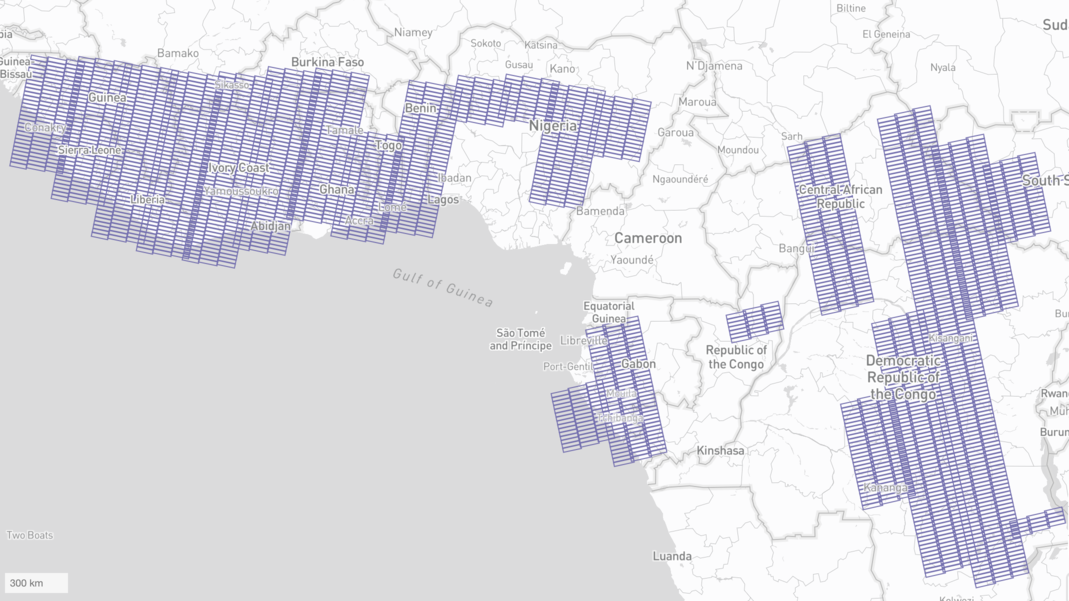
With S1D, we have seen significant expansion in coverage of parts of Central and West Africa on both passes. Historically, these areas were systematically imaged in one geometry only. Over 2000 new burst footprints have been added since Jun 1, 2026 in this geography.